

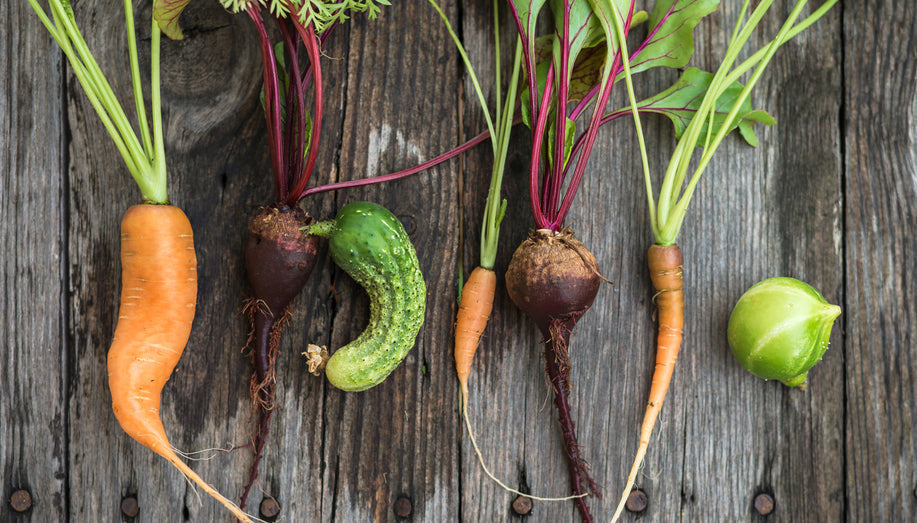
A crooked carrot or an oddly-shaped tomato isn't damaged goods — it's just produce that grew the way produce actually grows. A surprising amount of perfectly good food gets tossed each year for looking wrong rather than being wrong, even as hunger remains a serious problem for a large share of the world's population. Two simple habits go a long way toward closing that gap: freeze-drying what you'd otherwise throw out, and being willing to buy "ugly" produce in the first place.
Ugly Is the New Normal
Before anything goes in the trash, it's worth asking whether it could be freeze-dried instead — leftover meals, pantry items nearing their date, or produce that's starting to turn all freeze-dry well and extend their usable life considerably. The same logic applies to buying decisions: a misshapen carrot or an oddly-lobed tomato is a natural, normal variation in how produce grows, not a sign that something's wrong with it.
Ugly Is Also Very Nutritious
Some of the most nutrient-dense foods available also happen to be among the least conventionally attractive. Oysters, for example, have the highest zinc content of any food source, along with protein, several B vitamins, vitamin C and D, minerals, antioxidants, and omega-3s. Celery root, another frequently-passed-over vegetable, is a solid source of calcium, vitamins A, B6, C, and K, and fiber. Freeze-drying either one preserves that nutrition well, and stored properly, freeze-dried food keeps for up to 25 years on the shelf.
Ask for an Ugly Bin
If your grocery store doesn't already set aside a section for cosmetically imperfect produce, it's worth asking whether they would. Some retailers already offer discounted "ugly" produce bins specifically to keep good food out of the waste stream, and demand from shoppers is often what convinces others to follow.
Put More "Ugly" Food to Use
Reducing food waste covers more ways to make the most of what you buy, and 4 unique foods you can freeze dry is a good next stop if you're looking for less-common foods worth trying. If you end up with more preserved food than your household needs, building a nutritional safety net covers what to do with the extra.
Frequently Asked Questions
Is misshapen produce lower quality than "normal"-looking produce?
No — irregular shapes and sizes are a natural result of how produce grows and don't reflect lower nutritional value or quality.
What are some of the most nutritious "ugly" foods?
Oysters have the highest zinc content of any food source, along with protein, B vitamins, and other minerals. Celery root, often overlooked for its appearance, is rich in calcium and several vitamins.
How does freeze-drying help reduce food waste?
Freeze-drying lets you preserve leftovers, near-expiration pantry items, and produce before it spoils, extending its usable life instead of sending it to the trash.
Can grocery stores help reduce produce waste from appearance alone?
Yes — some retailers already set aside discounted bins for cosmetically imperfect produce, and asking your local store to do the same can help push that further.
Share:
25 Unique Foods You Can Freeze Dry
Reduce Food Waste: Freeze-Dry It or Share It