

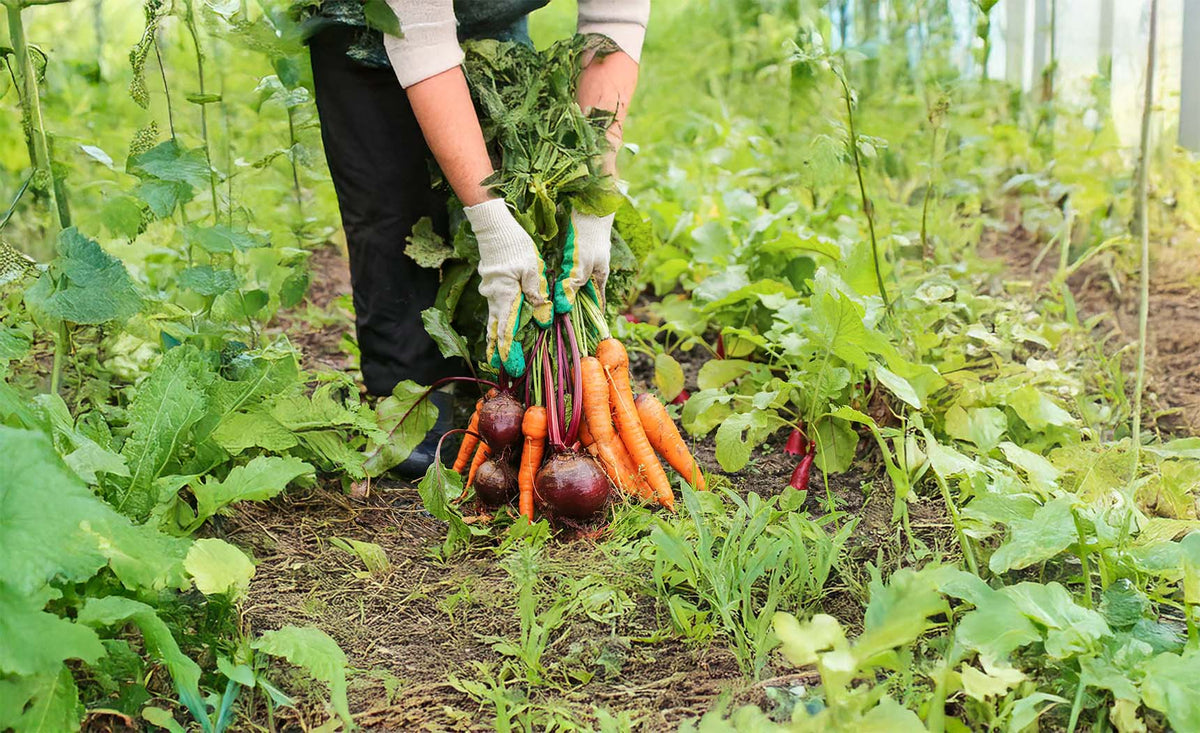
A big harvest rarely fits one preservation method. Some crops freeze-dry beautifully and lose almost nothing in the process; others are actually better off in a cold cellar or a cool pantry corner, no machine required. Sorting that out ahead of time — before the harvest actually arrives — is most of the battle.
Plan Before the Harvest Comes In
The easiest mistake is figuring out storage after the crops are already piling up on the counter. Before harvest season hits, it's worth deciding roughly how much of each crop you expect, and whether it's headed for the freeze dryer, the pantry, or cold storage, so you're not scrambling to process everything at once.

What Freeze-Dries Well
Most fruits and vegetables freeze-dry well and gain the most from it — produce that would otherwise spoil within days keeps for years instead, at close to its original flavor and nutrition. If you're not sure where to start, preserving your garden harvest and freeze-drying the harvest both go through specific crops in more detail.
What's Better Off in Cold Storage
A handful of crops actually keep for months in a cold, dark, humid space without any processing at all — think winter squash, potatoes, onions, and other root vegetables. These don't need to compete for freeze-dryer time when a cool cellar, garage, or even a well-set-up pantry corner does the job just as well. How to properly store root vegetables in the kitchen covers that side of things if that's more of what you're dealing with.
Having the Right Tools on Hand
Whichever method you're using, having supplies ready before harvest day matters — mylar bags and oxygen absorbers for anything freeze-dried, and clean, ventilated storage bins for anything going into cold storage. Running out of packaging mid-harvest is one of the more avoidable ways to lose part of a crop after doing all the work to grow it.
Frequently Asked Questions
Should every crop from a harvest be freeze-dried?
No — most fruits and vegetables freeze-dry well, but some crops like potatoes, onions, and winter squash actually keep just as long or longer in simple cold storage, without needing to be processed at all.
What's the advantage of planning harvest storage ahead of time?
Deciding in advance which crops go where (freeze dryer, pantry, or cold storage) avoids the scramble of processing everything at once when a large harvest comes in all at once.
What supplies do I need before a big harvest?
Mylar bags and oxygen absorbers for anything you plan to freeze-dry, plus clean, ventilated storage containers for anything headed to cold storage.
Which crops store best in a root cellar or cold storage?
Root vegetables, winter squash, and onions are classic cold-storage crops that keep for months without freeze-drying or canning.
Share:
Share the Love: Freeze-Dried Food for Giving Back
Zions Bank Features Freeze Drying on “Speaking on Business” Radio Show