

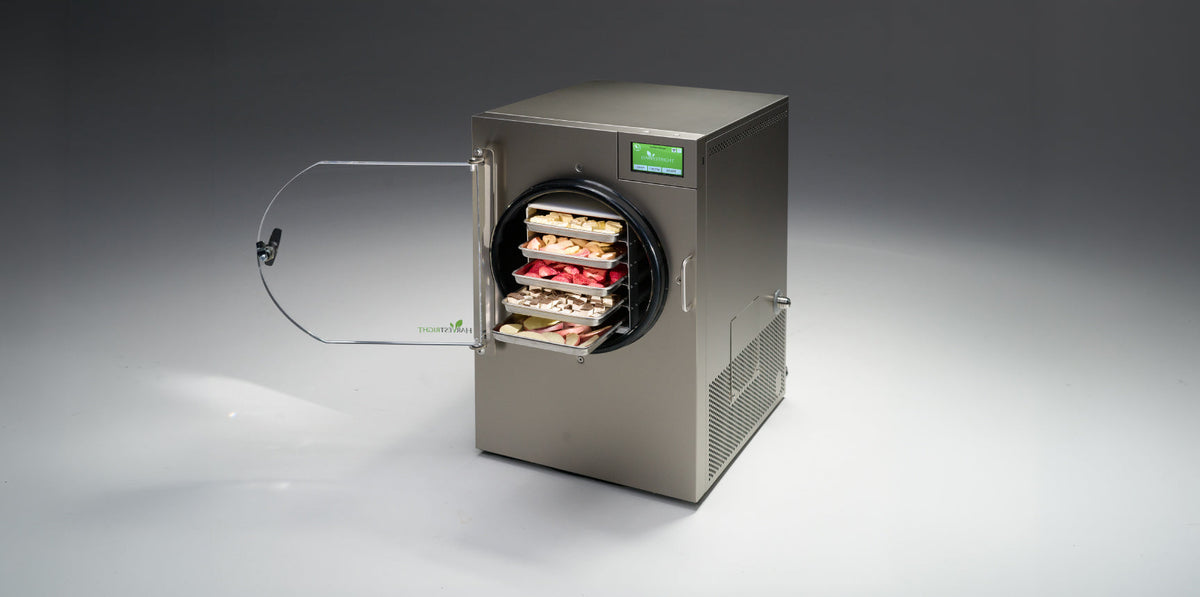
Freeze-drying looks the same no matter what's going into the machine — fruit, dairy, or a full dinner — but it's easier to picture with a real batch in mind. Here's what a run looks like from prep to rehydration, using a mixed load: raspberries, apples, ice cream sandwiches, scalloped potatoes, and ham.
Phase 1: Prepping the Food
Prep varies more than people expect. Raspberries can go on the tray whole, straight from the container. Apples need to be sliced thin enough to freeze-dry evenly. Ice cream sandwiches go in frozen, still in their wrapper cut open, no other prep needed. Scalloped potatoes and ham both do best sliced or portioned so they freeze-dry through evenly rather than staying dense in the middle. Whatever the food, the trays get loaded in a single, even layer — food piled too deep won't dry all the way through.
Phase 2: The Freeze-Drying Cycle
Once loaded, the trays go into the freeze dryer and the machine takes over. It freezes the food, then pulls a vacuum and slowly raises the temperature so the ice inside sublimates directly into vapor, skipping the liquid stage entirely. That's what makes freeze-drying different from dehydrating: it removes water without ever letting the food get warm and wet again, which is why the texture, color, and nutrition come through so much better on the other side. A mixed batch like this one — fruit, a frozen dessert, and a starchy casserole — typically takes longer than a load of just one food type, since the cycle runs until the densest item is fully dry.
Phase 3: Packaging for Storage
Once a cycle finishes, the food needs to go into an airtight package before it's exposed to humidity again. Mylar bags with oxygen absorbers, or vacuum-sealed jars, are the standard options — done right, freeze-dried food stored this way can last up to 25 years. How to package freeze-dried food so it keeps for 25 years walks through the packaging step in more detail.
Phase 4: Bringing It Back
Rehydration depends on what you're working with. Raspberries and apples just need a short soak in water, or can be eaten straight from the bag as a crunchy snack. Ice cream sandwiches are meant to be eaten freeze-dried, not rehydrated — that's the point. Scalloped potatoes and ham both come back with hot water added gradually until they're back to their original consistency. Rehydrating freeze-dried fruits and vegetables and rehydrating freeze-dried full meals, breads, and cakes cover the specifics for each category.
Want the Fuller Picture?
This walk-through covers one batch start to finish. For a broader look at how the machine works and what foods are good candidates, how to freeze-dry at home is the more complete reference, and tips for successful home freeze-drying is worth a read before your first few batches.
Frequently Asked Questions
What are the main steps in freeze-drying food?
Prepping the food (slicing or portioning as needed), running it through the freeze-drying cycle, packaging it airtight for storage, and rehydrating it later when you're ready to eat it.
Why does freeze-drying preserve food better than other methods?
Because the process freezes the food first, then removes the ice through sublimation under vacuum — turning it directly into vapor without ever passing through a liquid stage. That keeps the food's texture, color, and nutrition much closer to fresh than drying methods that involve heat and moisture.
Does a mixed batch of different foods take longer to freeze-dry?
Often, yes — a cycle runs until the densest item in the load is fully dry, so combining a quick-drying food like berries with a denser one like a casserole can extend the total cycle time.
Can all foods be rehydrated the same way?
No. Fruits and vegetables typically just need a short soak, full meals need hot water added gradually, and some foods — like ice cream sandwiches — aren't meant to be rehydrated at all; they're eaten freeze-dried.
Share:
Freeze Dried Snacks for Runners
Freeze Drying for Food Allergies: Safe Homemade Meals Wherever You Go