

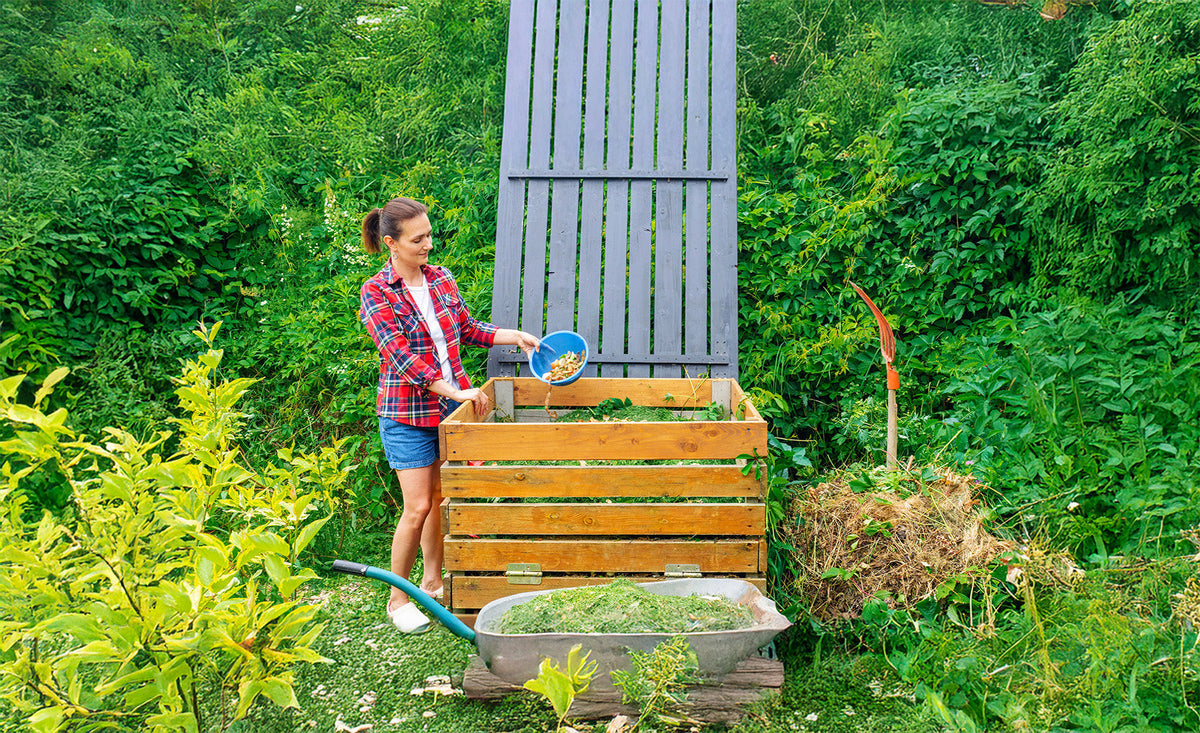
Most gardeners have a rough sense of what composting is, but fewer understand why it actually works or what it does for the soil. In nature, decaying plants break down into the basic nutrients other plants absorb — composting is just a deliberate, faster version of that same process.
The Two Ingredients: Green and Brown
Good compost needs both:
- "Green" materials — fresh and nitrogen-rich: plant clippings, food scraps, manure
- "Brown" materials — carbon-rich: wood chips, pine needles, dry leaves
Combined in the right balance, microorganisms break both down into humus — a dark, nutrient-dense material that improves soil structure, helps it hold water better, and supports the beneficial microorganisms that keep soil healthy long-term.
Getting the Ratio Right
The standard target is a green-to-brown ratio of roughly 25:1 to 30:1 (brown materials to green). Too much green material makes the pile smell; too much brown material slows everything down and leaves you with a pile of debris that never quite breaks down.
Putting It Together
A compost bin (bought or homemade) or a simple open pile both work, as long as the ratio is right. Once it's finished, compost looks like thick, crumbly, dark matter — spread it about 1-2 inches thick over your garden beds to enrich the soil.
Building Out Your Garden Further
If composting is the first step toward a more serious garden setup, 5 must-have garden gadgets covers the tools that make the rest of it easier, and is vertical gardening right for your space? is worth a look if space is tight. Grow a freeze-dry garden ties it all together once you're ready to plant with preservation in mind.

Frequently Asked Questions
What's the right ratio of green to brown material for composting?
Roughly 25:1 to 30:1, brown to green — too much green causes odor, and too much brown slows decomposition and leaves debris that doesn't fully break down.
What counts as "green" material in composting?
Fresh, nitrogen-rich material like plant clippings, food scraps, and manure.
What counts as "brown" material in composting?
Carbon-rich material like wood chips, pine needles, and dry leaves.
How do you use finished compost in a garden?
Spread it about 1-2 inches thick over garden beds to enrich the soil with nutrients and improve its structure.
Share:
Is Vertical Gardening Right for Your Space?
5 Must-Have Garden Gadgets to Make Gardening Easier