

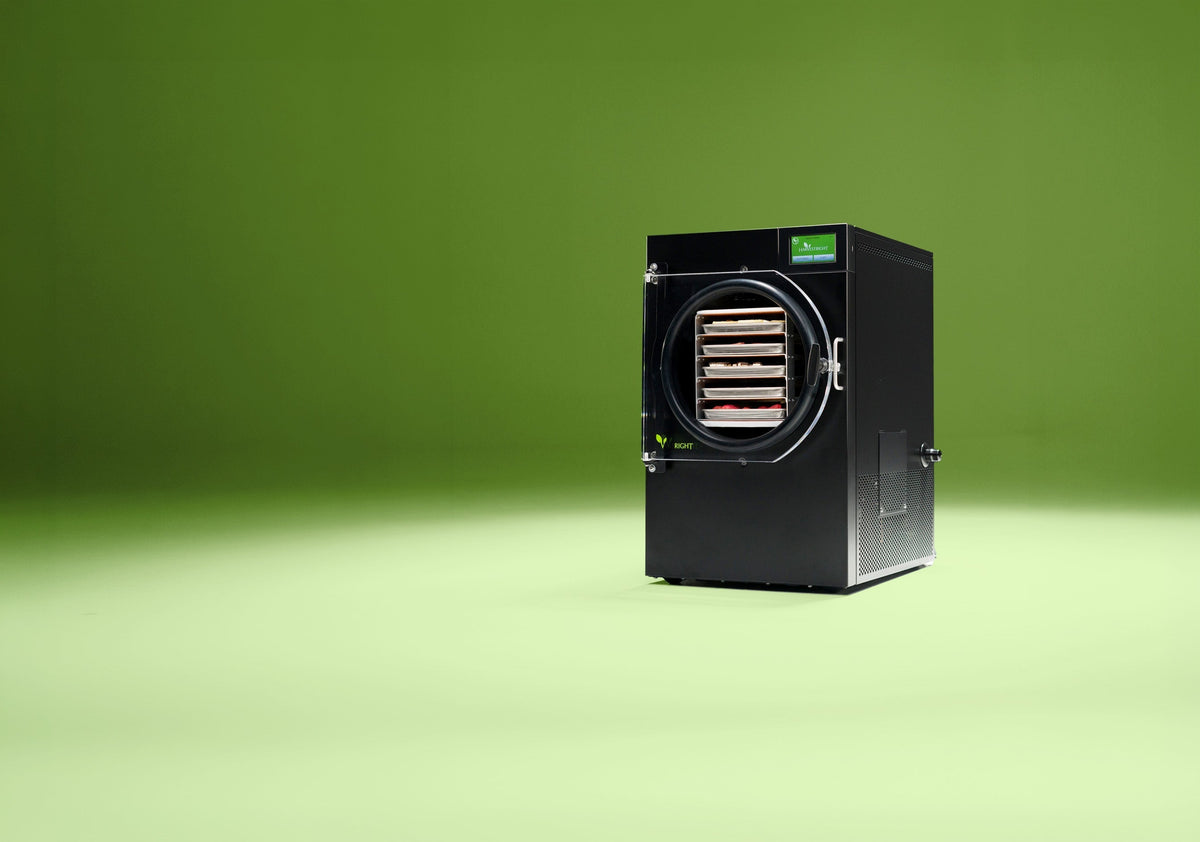
A Harvest Right freeze dryer is simple to operate, but what's happening inside it is far more complex than a refrigerator, a freezer, or a dehydrator. Four systems work together to pull water out of food while keeping its nutrition, flavor, color, and shape intact.
1. Freezing Colder Than a Standard Freezer
A typical home freezer only reaches about -10°F. Harvest Right's freeze dryers cool down to -50°F (-46°C) — a benchmark refrigeration experts told Harvest Right's own engineers wasn't achievable with a single-stage condensing unit when the machines were first being developed.
2. A Vacuum Strong Enough to Boil Water Cold
The second system is a vacuum pump capable of reaching 100–300 mTorr — a pressure low enough that it's often compared to the vacuum of outer space. At that pressure, water boils at around 0°F. That's what makes sublimation possible: water moves directly from ice to vapor while the food stays frozen the entire time, rather than thawing and reabsorbing moisture the way dehydrated food does.
3. Precisely Controlled Heat
Under each shelf, controllable heaters gently warm the trays of food to accelerate that sublimation process. It's a careful balance — enough heat to speed up evaporation, not so much that it damages the food's nutrition, flavor, color, or shape.
4. A Computer That Runs the Entire Cycle
A dedicated computer and purpose-built software manage time, temperature, and pressure throughout the cycle, using sensors that track both the food's temperature and the chamber's vacuum level. Once a cycle starts, the machine adjusts on its own — no monitoring or manual intervention required, even when different foods are loaded on different shelves at the same time. That level of unattended, self-adjusting operation isn't something other freeze dryers on the market offer.
Where the Water Actually Goes
The water vapor pulled out of the food doesn't go straight into the vacuum pump — moisture entering the pump over time would damage it. Instead, an ice trap catches the water vapor and re-freezes it before it can reach the pump. After the cycle finishes, an onboard defrost process melts that ice and drains it away, resetting the machine for the next batch.
More on How Freeze Drying Works
If you want the shorter version of how the whole process fits together, how home freeze-drying works: the basics is a good next stop. And if you're weighing a freeze dryer against a dehydrator, freeze drying vs. dehydrating: which preserves food longer breaks down exactly why the cold, low-pressure process described above produces a different result than heat-based drying.
Frequently Asked Questions
How cold does a Harvest Right freeze dryer get?
Down to -50°F (-46°C) — far colder than a standard home freezer, which typically only reaches about -10°F.
Why does freeze drying need a vacuum?
The vacuum pump drops chamber pressure to 100–300 mTorr, low enough that water boils at around 0°F. That lets water sublimate directly from ice to vapor while the food stays frozen, instead of thawing first.
Does a Harvest Right freeze dryer need to be monitored during a cycle?
No. An onboard computer manages temperature, pressure, and time automatically for the whole cycle, using sensors to track conditions in real time — even when different foods are loaded on different shelves at once.
What happens to the water that comes out of the food during freeze drying?
It's captured in an ice trap before it can reach and damage the vacuum pump. After the cycle ends, an onboard defrost process melts that ice and drains it out automatically.
Share:
Which Preserves More Nutrition? Freeze Drying vs. Dehydrating
How Does Freeze Drying Work?