

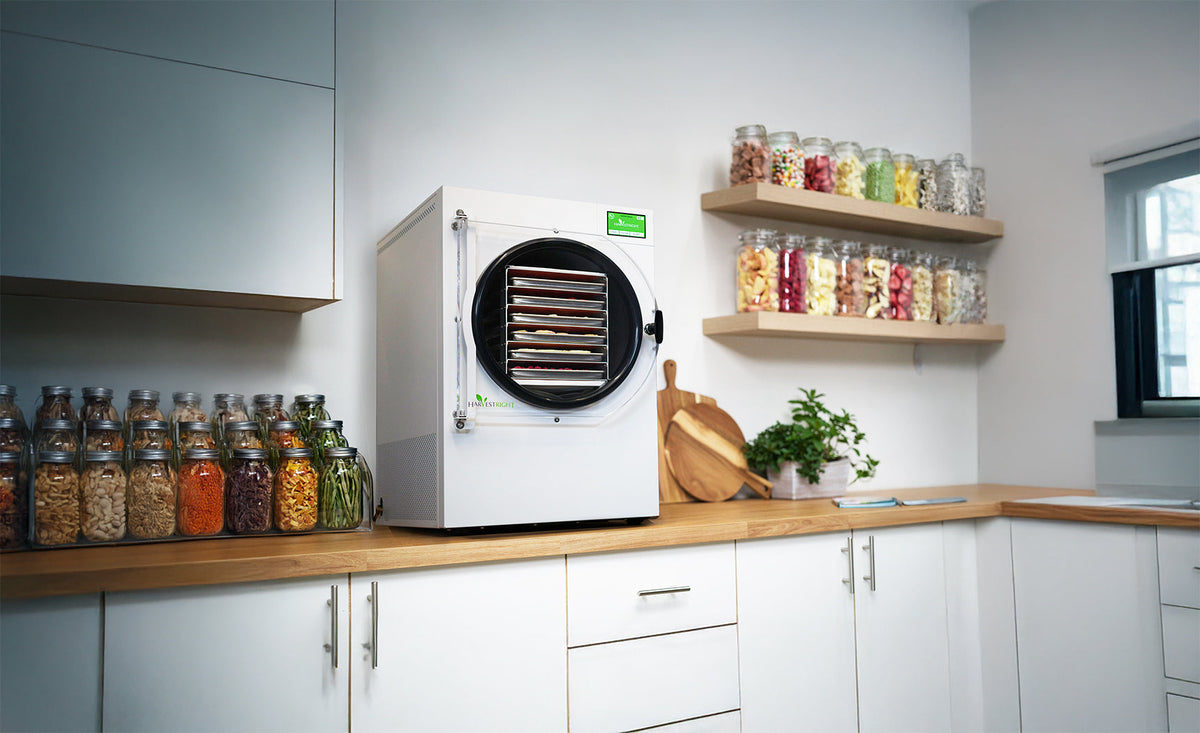
Food waste is expensive in ways most households never fully add up. Between spoiled produce, forgotten leftovers, and food tossed simply because it wasn't used in time, a typical household loses real money every year — and that's before counting the energy, water, and resources spent growing and disposing of food that never gets eaten. On a global scale, hunger remains a serious problem even as a large share of the food supply goes to waste, which makes the case for using what we buy more carefully harder to ignore.
A freeze dryer is one of the more direct ways to close that gap. Households that make consistent use of one often report substantial monthly savings simply by wasting less of what they already buy.
How Freeze-Drying Actually Works
Nearly any food can be freeze-dried, including meat, cheese, fruits, vegetables, dairy, and even complete meals. The process itself is simple:
- Food is frozen to -40°F or colder inside a home freeze dryer.
- The dryer creates a powerful vacuum around the frozen food.
- As the food warms slightly, the ice converts directly to vapor (sublimation) and is drawn out.
- The finished food is sealed in moisture- and oxygen-proof packaging.
- When you're ready to eat it, rehydrating with water restores much of the original flavor, aroma, texture, and appearance.
Where the Savings Actually Come From
A freeze dryer pays off in several concrete ways: buying fresh food in bulk or discounted near its expiration date and preserving it before it turns, stocking up on peak-season produce from a farmers market, and extending your own garden's harvest well past the growing season. It also turns leftovers into a genuine emergency food supply, built around your own family's dietary needs rather than the additives and preservatives found in most commercial freeze-dried products.
Put the Savings to Work
How freeze drying saves money goes deeper into the specific mechanics of the savings described here, and reducing food waste covers more everyday habits worth building alongside a freeze dryer. If your own garden is part of the plan, how to grow a freeze-dry garden and preserve your garden produce are natural next steps.
Frequently Asked Questions
How does a freeze dryer actually save money?
By letting you buy food in bulk or on sale, preserve garden surplus and farmers market finds before they spoil, and turn leftovers into a real emergency food supply instead of throwing them away.
How does the freeze-drying process work?
Food is frozen to -40°F or colder, then placed under a powerful vacuum. As it warms slightly, the ice converts directly to vapor and is removed, leaving the food shelf-stable once sealed in moisture- and oxygen-proof packaging.
Is freeze-dried food healthier than store-bought freeze-dried products?
Homemade freeze-dried food can be made without the additives or preservatives common in many commercial freeze-dried products, and tailored to your own family's dietary needs.
Can a freeze dryer help reduce food waste from a garden?
Yes — freeze-drying lets you preserve a garden's harvest well beyond its growing season instead of losing the surplus to spoilage.
Share:
How to Preserve Your Garden Harvest by Freeze-Drying
How to Preserve Your Garden Harvest by Freeze-Drying