

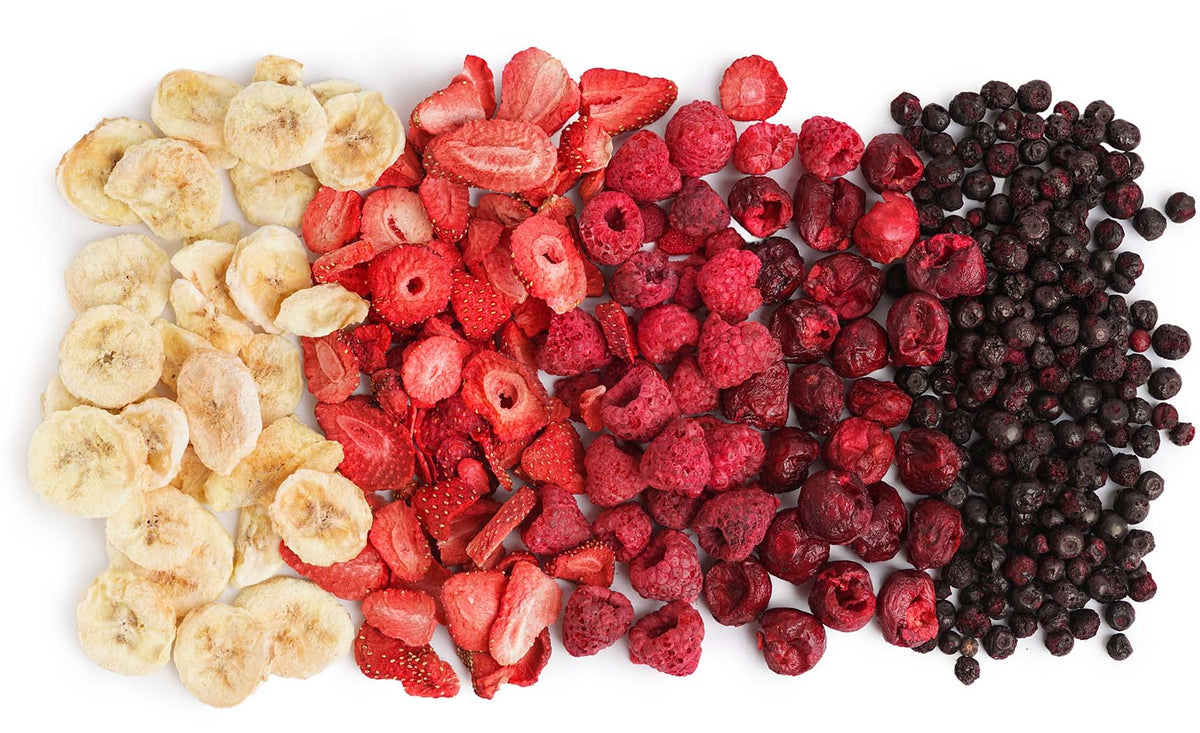
Diets built around restriction rarely last, which is probably why so many New Year's resolutions don't make it past February. Three smaller, more durable changes tend to hold up a lot better — and a freeze dryer makes all three easier to actually follow through on.
1. Cut Back on Added Sugar
There's a real difference between the natural sugar in milk or fruit and the added sugar manufacturers use to make processed food taste better. Added sugar is the kind linked to blood sugar spikes and unwanted weight gain, and it hides under dozens of different names on ingredient labels — corn syrup, high-fructose corn syrup, dextrose, fructose, glucose, honey, maple syrup, molasses, sucrose, cane sugar, and fruit juice concentrate are just a handful of them. When you freeze-dry your own food, you control exactly what goes in, which makes it realistic to cut added sugar out almost entirely rather than just cutting back.
2. Eat Closer to Real Food
A quick audit of your kitchen cabinets is usually eye-opening. Aim to shift the balance toward raw foods, dried whole grains and beans, raw or simply roasted nuts, and unprocessed proteins. Beyond the health benefits, food that starts closer to its whole form also freeze-dries and rehydrates better, so this step pays off twice.
3. Make Time for Food
Plenty of food cultures around the world treat meal preparation and eating as something worth slowing down for, not just a task to get through. Shopping at a farmer's market instead of rushing through a big-box store, treating meal prep as a calming ritual rather than a chore, setting an actual table instead of eating standing up, and taking a moment of gratitude before a meal are all small ways to bring that same mindset home.
Keep the Momentum Going
Get organized for a healthy new year covers a practical batch-prep method that pairs well with these three steps, and freeze-drying make-ahead meals for efficiency and weight loss is a good next read if portion control and planning ahead are part of your goal this year.
Frequently Asked Questions
Why is added sugar worse than natural sugar?
Added sugar is the kind manufacturers use to enhance flavor in processed food, and it's linked to blood sugar spikes and weight gain in a way that the natural sugar in whole foods like fruit and milk generally isn't.
How do I know if a food has added sugar?
Check the ingredient label — added sugar goes by dozens of different names, including corn syrup, dextrose, fructose, honey, cane sugar, and fruit juice concentrate.
Does eating "real food" mean giving up convenience?
Not necessarily — freeze-drying whole, minimally processed foods yourself gives you the same convenience as packaged food without the added sugar and preservatives that usually come with it.
Why do diets often fail long-term?
Diets built around strict restriction are hard to sustain. Smaller, durable changes — cutting added sugar, eating closer to whole foods, and making time for meals — tend to hold up much better over time.
Share:
Get Organized for a Healthy New Year: Batch-Prep Method
3 Must-Have Vegetables for Your Freeze-Dry Garden